

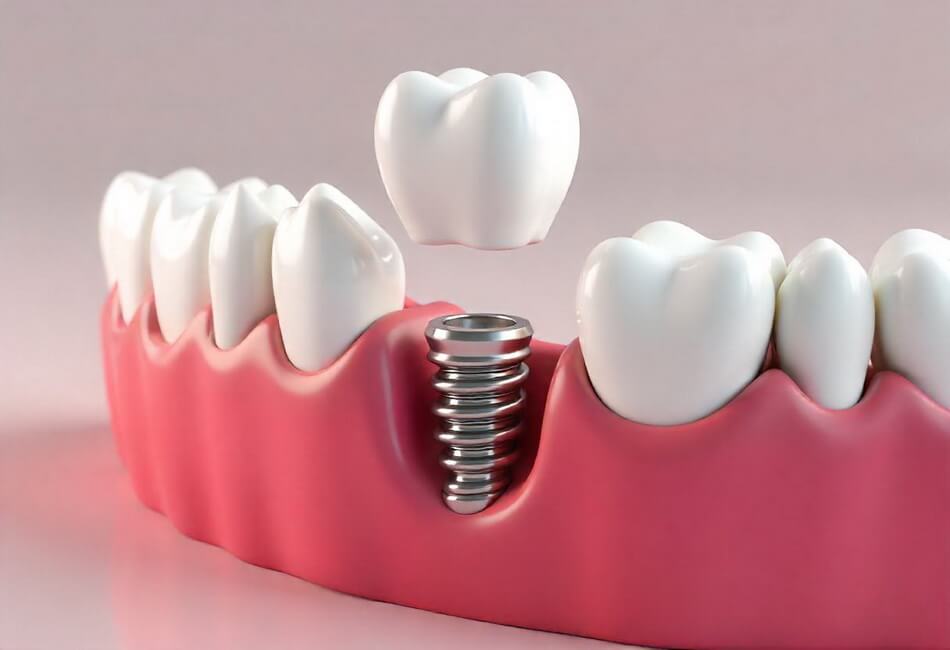
Dental implant procedures are among the most significant advancements in dentistry for replacing missing teeth and restoring a natural smile. This technique is the ideal solution for individuals who have lost teeth or prefer not to use dentures, offering a permanent improvement in oral function and aesthetics.
With modern technological advancements, it has become possible to perform dental implants without surgery or gum incision, providing patients with a more comfortable, less painful experience and exceptional results.
Over the years, the field of dental implantology has evolved dramatically thanks to innovative technologies that have enhanced precision, safety, and effectiveness.
For patients who are anxious about surgical procedures, non-surgical dental implantation offers the perfect alternative, addressing both health and cosmetic concerns.
With the increasing global focus on improving quality of life and minimizing complications, this technique has become a popular choice among both patients and dentists — representing a major leap forward in modern dentistry.
What Are Dental Implants Without Surgery?
Dental implants without surgery are a modern technique performed without making any gum incisions or using a scalpel or traditional surgical tools. This approach relies primarily on advanced technologies such as 3D imaging and digital guidance, allowing dentists to place implants with extreme precision and minimal invasiveness.
This method helps shorten treatment and recovery time compared to conventional implantation, while reducing potential surgical complications. It also provides an ideal solution for patients with medical conditions or anxiety about traditional surgeries.
Benefits and Advantages Compared to Traditional Dental Implants
- Reduced pain and swelling: The absence of gum incision significantly minimizes pain and swelling typically associated with conventional surgical procedures.
- Shorter recovery time: Patients can return to their normal routines quickly since the recovery period is much shorter compared to traditional implant surgery, which may take weeks or even months.
- Accurate results and natural appearance: Advanced technology ensures highly precise implant placement, leading to both functional and aesthetic results that blend seamlessly with natural teeth and enhance the overall smile.
- Minimally invasive procedure: This approach is ideal for patients who fear surgery or have medical conditions preventing them from undergoing traditional implant surgery.
- Lower complication rates: Minimizing surgical intervention reduces the risk of infection, bleeding, and other potential complications.
- Enhanced patient comfort: The procedure is less physically and emotionally demanding, making it suitable for patients across different age groups.
Technologies Used in Dental Implants Without Gum Incision
3D Imaging:
Computed tomography (CT) imaging is a fundamental tool for accurately identifying the ideal implant site, enhancing precision, and reducing procedural errors.
This technology creates a 3D model of the jaw, enabling accurate planning to determine the best implant position while avoiding nerves and blood vessels.
Digital Guidance:
Using advanced software, a personalized treatment plan is designed for each patient. A custom surgical guide is fabricated to fit the jaw precisely, assisting the dentist in guided implant placement with optimal accuracy and minimal risk.
This digital guidance allows for exact implant positioning without the need for gum incision.
Advanced Implant Instruments:
Modern implant tools make it possible to place implants easily without incisions or sutures, significantly reducing surgical intervention.
Laser Techniques:
In some cases, laser technology is used to prepare the bone gently and precisely for implant placement, enhancing procedural efficiency and minimizing infection risk.
Advanced Implant Materials:
Highly biocompatible materials like titanium and treated zirconium are used for implants due to their excellent ability to fuse with bone and ensure long-term stability.
Steps of Dental Implantation Without Gum Incision
1- Initial Evaluation:
A clinical examination of the mouth and teeth is performed, supported by 3D imaging to accurately assess bone condition.
A comprehensive review of the patient’s medical history ensures there are no health contraindications.
The treatment plan and available options are discussed with the patient based on individual needs.
2- Implant Preparation:
The digital guidance system is used to design the procedure, ensuring perfect compatibility with the patient’s jaw.
The implant size and type are selected based on bone density and structure to achieve optimal results.
High-quality materials are chosen to ensure long-term success and minimize complications.
3- Implant Placement:
The implant is inserted directly into the bone using precision instruments, without cutting the gum or stitching the tissue — reducing operation time.
The procedure is performed under local anesthesia to ensure comfort and minimize pain.
4- Crown Placement:
After a short healing period (ranging from a few weeks to a few months), the dental crown is attached, completing the natural look.
The crown is designed to match the color and shape of adjacent teeth, providing a harmonious and natural appearance while restoring oral function.
Who Are the Ideal Candidates for Non-Surgical Dental Implants?
- Individuals who have lost teeth and want a permanent and effective solution that restores confidence.
- Patients with sufficient bone density to support implants — healthy bone is essential for success.
- Those who prefer minimally invasive treatments and fear traditional surgeries due to anxiety or medical history.
- Patients seeking quick, effective solutions to restore both function and appearance.
- Individuals with medical conditions that make them unsuitable for traditional surgical methods, such as bleeding disorders.
What Determines the Cost of Dental Implants Without Gum Incision?
The cost of dental implants without gum incision varies from one patient to another based on several key factors that influence the final treatment cost:
Number of teeth to be replaced:
The more teeth that need replacement, the higher the cost. Prices differ between single-tooth and multiple or full-arch implants.
Bone quality and density:
If bone resorption or weakness exists, additional procedures such as bone grafting may be required, increasing total cost.
Type of implant used:
Different implant systems vary in quality, longevity, and manufacturer, which affects pricing.
Technology used:
Since this procedure relies on 3D imaging and digital guidance, it may be more expensive than traditional methods that lack these advanced technologies.
Dentist’s expertise:
The experience and specialization of the implant dentist play a major role in cost, reflecting higher-quality outcomes and greater procedural success.
Clinic location:
Prices differ across cities and countries depending on living costs and the level of medical services offered.
Type of crown placed over the implant:
The crown material — whether porcelain, zirconia, or ceramic — impacts the cost, depending on its durability, quality, and natural appearance.
The Role of Wonders Dentistry in Dental Implants Without Gum Incision
Wonders Dentistry is one of Egypt’s leading clinics specializing in non-surgical dental implant procedures.
Thanks to its team of highly qualified specialists and use of advanced technology, Wonders Dentistry has become a top destination for patients seeking world-class care. The clinic offers:
Comfortable experience: All procedures are performed under local anesthesia to ensure patient comfort throughout.
Advanced technologies: Including digital 3D imaging and computer-guided systems for accurate implant placement and outstanding results.
Long-lasting, guaranteed results: Natural-looking, highly functional implants that maintain patient satisfaction for years.
Personalized care: Customized treatment plans designed for each patient based on their specific needs and health condition.
Professional medical team: Highly experienced dentists using cutting-edge techniques to reduce risks and maximize success rates.
Commitment to quality: Adhering to the highest medical standards to ensure patient safety and exceptional outcomes.
FAQs
What is flapless dental implant surgery and how does it differ from traditional implantation?
Flapless implant surgery is an advanced surgical technique where the implant is inserted directly through the gum tissue without making an incision or elevating a mucoperiosteal flap. In traditional implantation, the surgeon cuts the gum with a scalpel to expose the bone, drills the implant site, then sutures the gum closed. In the flapless technique, a 3D-printed surgical guide is used, secured to adjacent teeth or gum tissue, containing precise holes that direct the implant to its ideal position without raising the gum. This preserves microcirculation to the bone and reduces postoperative swelling and pain by up to 60% compared to the traditional method.
Can anyone undergo flapless dental implant surgery or are there health conditions?
No, flapless dental implant surgery is not suitable for everyone and requires strict conditions. First, available bone height must be sufficient — usually at least 10 mm — because the technique does not allow direct visualization of bone during drilling, increasing the risk of penetrating the maxillary sinus or inferior alveolar canal. Second, bone density must be good (D1 or D2 per Lekholm & Zarb classification) to ensure implant stability without visual adjustments. Third, gum tissue must be healthy and free from chronic inflammation. Fourth, this technique is not recommended for patients requiring guided bone regeneration (GBR) or sinus lift in the same session, as these require direct bone visualization. Patients with severe osteoporosis or uncontrolled diabetes may not be ideal candidates due to poor bone response.
How does the surgeon ensure accurate implant placement without direct bone visualization?
Accuracy is ensured through digital preoperative planning and a 3D-printed surgical guide. The process begins with high-resolution CBCT imaging showing bone, nerves, and blood vessels in thin slices. This data is imported into software such as Blue Sky Plan or CoDiagnostiX to determine implant position with precision up to 0.1 mm horizontally and 0.5 degrees in angulation. A surgical guide is then fabricated from biocompatible resin, secured to teeth or gum tissue, containing metal sleeves that guide the drill and implant precisely. Some advanced clinics use robotic implant surgery such as Yomi or Navident, providing real-time haptic guidance during drilling.
What are the success rates of flapless dental implant surgery compared to the traditional method?
Flapless dental implant surgery success rates range between 95% and 98% in carefully selected cases, comparable to traditional implantation. However, the difference lies in healing quality and complications: a study published in the Journal of Clinical Periodontology showed that the flapless technique reduces peri-implant mucositis by 40% in the first year, because preserving soft tissue and blood vessels improves nourishment of the surrounding gums. It also reduces marginal bone loss by 0.3 mm on average during the first year compared to the traditional method. The main risk is malposition if digital planning is inaccurate, potentially leading to incorrect implant angulation or proximity to nerves. For this reason, this technique requires a surgeon with extensive experience in computer-guided surgery.
Can the crown be placed immediately after flapless dental implant surgery?
Yes, in some cases immediate loading can be performed after flapless dental implant surgery, but this requires strict conditions: primary stability must be high — measured by insertion torque of at least 35 N/cm — to prevent implant movement during bone healing. Bone must be dense (D1 or D2) to ensure mechanical friction. Gum tissue must be healthy with no infection at the implant site. The implant position must be in the anterior aesthetic zone where chewing forces are lower than posterior molars. In these cases, a provisional crown is placed in the same session, giving the patient an immediate smile and reducing visits. However, in posterior areas or if primary stability is below 35 N/cm, delayed loading after 3–6 months is preferred to ensure successful osseointegration.


