

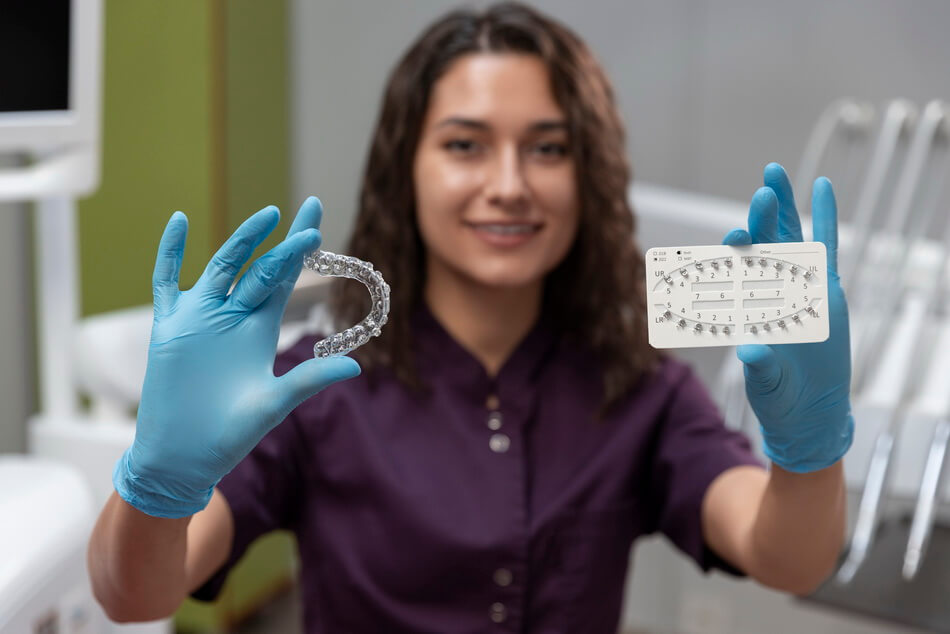
Selecting the right orthodontic specialist is a key step toward achieving successful and long-lasting treatment results. The field of orthodontics includes a wide variety of treatments aimed at improving tooth alignment, correcting bite issues, and restoring the beauty of your smile. For this reason, finding an orthodontist who combines competence, experience, and the ability to meet your individual needs is crucial.
In this article, we’ll explain the importance of choosing the right orthodontic specialist, what orthodontic treatment actually is, the conditions that require it, and the key steps and factors to consider when selecting your orthodontist.
Why is choosing the right specialist crucial for treatment success?
When you decide to begin orthodontic treatment, the first and most important step is selecting the right orthodontist. This choice doesn’t only affect the cosmetic outcome of the treatment but also has a significant impact on improving your overall bite function.
A successful experience begins with building a relationship of trust with your orthodontist—someone who understands your needs and possesses extensive expertise in the field.
Whether you’re considering traditional metal braces or modern clear aligners, choosing a dentist who has both knowledge and skill ensures you receive a complete treatment plan tailored to every detail of your case.
What is orthodontic treatment?
Orthodontics is a branch of dentistry concerned with correcting teeth alignment and bite irregularities. Orthodontic treatment involves using different appliances and techniques, such as metal braces or clear aligners.
The goal of treatment is to reposition the teeth and correct deviations to ensure equal force distribution while chewing, resulting in an aesthetic appearance that complements the face.
Orthodontic treatment is based on a carefully designed plan that begins with a thorough examination and an accurate assessment of the teeth, followed by a personalized treatment strategy that uses the appropriate appliances to achieve the desired result.
Conditions that require orthodontic treatment
Orthodontic treatment is recommended in several cases, including:
- Crooked or misaligned teeth: When the upper and lower teeth don’t meet properly, affecting chewing function.
- Bite problems: Such as overbite or underbite, which can lead to jaw pain or even temporomandibular joint (TMJ) issues.
- Gaps between teeth: Large spaces can affect the appearance of the smile and increase the risk of plaque buildup and tooth decay.
Steps for choosing an orthodontist
Selecting the right orthodontic specialist involves following well-considered steps that help you make the best decision. The most important steps include:
Checking qualifications and experience:
- Academic credentials: Make sure the doctor holds the required certifications and specialization in orthodontics.
- Practical experience: It’s best to choose a doctor who has several years of experience in treating patients using both metal braces and clear aligners.
- Continuing education: Participation in specialized workshops and training programs is a good indicator that the doctor stays updated and continues to develop professionally.
Reading reviews and testimonials:
- Patient feedback: Reading reviews from previous patients helps you understand their satisfaction with both the results and the level of care provided.
- Proven results: Looking at before-and-after photos and success stories is a strong sign of the doctor’s competence.
- Professional reputation: You may also check recommendations from other dentists or professionals in the same field, as a good reputation is a key factor in making your decision.
Factors to consider when choosing an orthodontist
Several factors influence your choice of orthodontist and should be part of your evaluation criteria:
The importance of clinic location:
- Geographic convenience: Choose a clinic located near your residence to make regular visits easier.
- Accessibility: The clinic should be equipped with modern facilities that make access and treatment comfortable.
Working hours and flexibility:
- Appointment scheduling: Ensure the clinic offers flexible appointment times that fit your daily routine.
- Responsiveness: Choose a clinic that’s easily reachable and ready to answer your questions or provide assistance anytime.
Technology and equipment:
- Modern devices: It’s essential that your doctor uses the latest technologies such as digital imaging and CAD/CAM systems for designing treatment plans.
- Innovative techniques: The use of clear aligners and modern braces systems indicates that the clinic keeps pace with professional advancements.
Cost and payment options:
- Price transparency: Make sure the treatment cost is clear and free from hidden fees.
- Installment options: Choose a clinic that offers flexible payment plans to suit various budgets.
- Health insurance: Check whether the clinic accepts insurance that might cover part of your treatment cost.
Meeting the orthodontist in person
Before making your final decision, it’s important to have a consultation with the orthodontist to ask all necessary questions and get a clear idea about their experience and treatment quality.
Key questions to ask
- What is your experience in orthodontic treatment?
- Which type of braces do you recommend for my case (metal braces or clear aligners) and why?
- How do you evaluate cases and plan treatments?
- What is the expected duration of treatment, and what are the main steps involved?
- What’s the total treatment cost, and what payment options are available?
Evaluating the clinic and its facilities
Clinic equipment: Take a tour of the clinic to ensure it’s clean, organized, and equipped with advanced orthodontic tools.
Staff: Get to know the dental team and make sure they’re well-trained and professional.
Comfort and atmosphere: The clinic should provide a comfortable and relaxing environment to reduce anxiety during treatment.
Why is choosing the right orthodontist so important?
Selecting the right orthodontist directly affects the success of your treatment and the achievement of optimal results.
A skilled orthodontist doesn’t just design a treatment plan that meets your functional and aesthetic needs — they also provide psychological support that makes the entire experience easier and more comfortable.
With the right choice, you can minimize potential complications that could impact treatment results, such as poor response or post-treatment issues.
Choosing the right orthodontic specialist ensures you receive customized consultations and a well-structured treatment plan suited to your individual case.
For example, if you prefer clear aligners for aesthetic reasons, your orthodontist will recommend the most effective plan that maintains your appearance during treatment.
And if you need traditional metal braces, the doctor will design a comprehensive plan that ensures stable teeth alignment and improved chewing function.
Ultimately, choosing the right orthodontist is a decisive step in your orthodontic journey. It’s the factor that guarantees you satisfying, long-term results.
By verifying qualifications, experience, patient feedback, and clinic facilities, you can make an informed decision that delivers the best outcome.
Whether you’re considering metal braces or clear aligners, working with a qualified orthodontic specialist helps you achieve a natural, balanced smile that boosts your confidence and enhances your overall quality of life.
Remember, a successful treatment plan starts with choosing the right orthodontist—one who can guide you through every stage of your journey, from your first consultation to your post-treatment follow-up.
With that, you can enjoy properly aligned, healthy teeth that reflect the beauty of your smile and improve your oral function overall.
FAQs
What is the difference between a general dentist and an orthodontist, and can a general dentist fit braces?
An orthodontist is a dentist who holds a bachelor’s degree in dentistry (5 years) plus additional postgraduate studies lasting 3 to 5 years in an orthodontic residency program. During this period, they train in tooth movement mechanics, smile design, skeletal jaw malocclusion treatment, and management of complex orthodontic appliances such as self-ligating brackets and functional appliances. A general dentist’s education is limited to 5 years plus a 1-year internship, with no specialized training in orthodontics. Although some general dentists offer very limited orthodontic treatments (short-term orthodontics), they are not qualified to treat complex cases such as severe crowding, open bite, or vertical tooth rotation. Choosing an orthodontist ensures a precise treatment plan based on scientific studies and specialized clinical experience.
How do I verify an orthodontist's qualifications and are international certifications important?
You can verify an orthodontist’s qualifications through several steps: first, request to see academic certificates confirming they hold an MSc or PhD in Orthodontics from an internationally recognized university. Second, verify membership in the American Association of Orthodontists (AAO) or European Orthodontic Society (EOS), as these memberships require proof of specialized training. Third, look for board certifications such as the American Board of Orthodontics, an optional certification awarded after passing a difficult oral and written exam assessing ability to treat complex cases. Fourth, review their scientific participation record: a good specialist participates in international conferences and publishes research in peer-reviewed journals. International certifications are important because they ensure the doctor is familiar with the latest global techniques and treatment protocols.
Can I rely solely on online reviews when choosing an orthodontist?
No, online reviews are a useful tool but insufficient alone. They should be evaluated based on precise criteria: quality of written content — do reviews include details about the treatment experience or just generic words like “excellent”? Date distribution — are they spread over long periods or concentrated in a short timeframe, which may indicate fake reviews? Before and after photos — does the doctor publish real treatment case photos with patient consent, or use stock internet images? Response to negative reviews — does the doctor handle complaints professionally or ignore them? Beyond reviews, you should: visit the clinic personally to verify cleanliness and equipment, request an initial consultation to understand the doctor’s approach and ability to explain the treatment plan, and inquire about the number of similar cases the doctor has treated for your specific condition.
What modern technologies should an orthodontist use and is CAD/CAM necessary?
An orthodontist should use modern technologies ensuring diagnostic precision and reduced treatment duration:
- 3D Digital Imaging (CBCT / Intraoral Scanning): Instead of uncomfortable traditional impressions, an intraoral scanner creates a precise digital tooth model with dimensions reaching 20 microns. This improves patient comfort and reduces device manufacturing errors.
- Digital Smile Design (DSD): Allows patients to see expected results before starting treatment through computer simulation showing how their smile will look after brace removal.
- Self-Ligating Brackets: Reduce friction between wire and bracket, accelerating treatment by 25–30% and reducing adjustment visits.
- CAD/CAM Technology in Device Manufacturing: Used to produce clear aligners such as Invisalign and custom brackets with high precision. It is necessary if you prefer clear aligners, but not mandatory for traditional metal braces.
Can I compare orthodontists based on cost alone and what are the risks?
No, choosing an orthodontist based on price alone is one of the biggest mistakes that may cost you your health and money long-term. Risks include: incomplete treatment — a cheap doctor may rush treatment to accommodate more cases, leading to superficial results and tooth relapse. Health complications — improper mechanical force application may cause root resorption, alveolar bone loss, or TMJ disorder. Need for supplementary treatment — you may need retreatment later at higher cost. Instead of comparing price alone, compare total treatment cost including: estimated number of visits, cost of devices and technologies used, retainer cost after brace removal, and warranty duration on results. Specialized clinics like Wonders Center offer a comprehensive treatment plan at a transparent price including all stages from initial examination to follow-up for one year after brace removal.


